Racket Sports Cut Mortality 15%, Swimming Does Nothing: Harvard's Definitive Exercise Ranking
A 30-year Harvard study of 111,467 health professionals ranked eight common exercise types by mortality reduction. Tennis and squash cut all-cause mortality 15%. Swimming showed no significant benefit. And exercising across five or more activities added another 19% survival advantage.

Racket Sports Cut Mortality 15%, Swimming Does Nothing: Harvard’s Definitive Exercise Ranking
Most exercise advice boils down to “just move more.” A landmark 2026 study from Harvard’s T.H. Chan School of Public Health goes further. It ranked eight common types of physical activity by how much they actually reduced the risk of dying.
The results challenge conventional wisdom about which exercises are worth your time.
The Study
Researchers followed 111,467 health professionals — 70,725 women from the Nurses’ Health Study and 40,742 men from the Health Professionals Follow-Up Study — for up to 32 years. That is 2,431,318 person-years of follow-up and 38,847 recorded deaths.
Every two years, participants reported which physical activities they engaged in and how much time they spent on each. The researchers tracked eight categories: walking, jogging, running, bicycling, swimming, tennis or squash, climbing stairs, and weight training or resistance exercise.
The study, published in BMJ Medicine in January 2026, was led by Han H and colleagues from the Harvard departments of Nutrition and Epidemiology.
The Ranking
The results were unambiguous. Here are the hazard ratios (HR) for all-cause mortality at the highest level of each activity, compared to the lowest. Lower is better.
| Exercise Type | Hazard Ratio | Mortality Reduction |
|---|---|---|
| Walking | 0.83 | 17% |
| Tennis or squash | 0.85 | 15% |
| Rowing or callisthenics | 0.86 | 14% |
| Running | 0.87 | 13% |
| Weight training | 0.87 | 13% |
| Jogging | 0.89 | 11% |
| Bicycling | 0.96 | 4% |
| Swimming | 1.01 | Not significant |
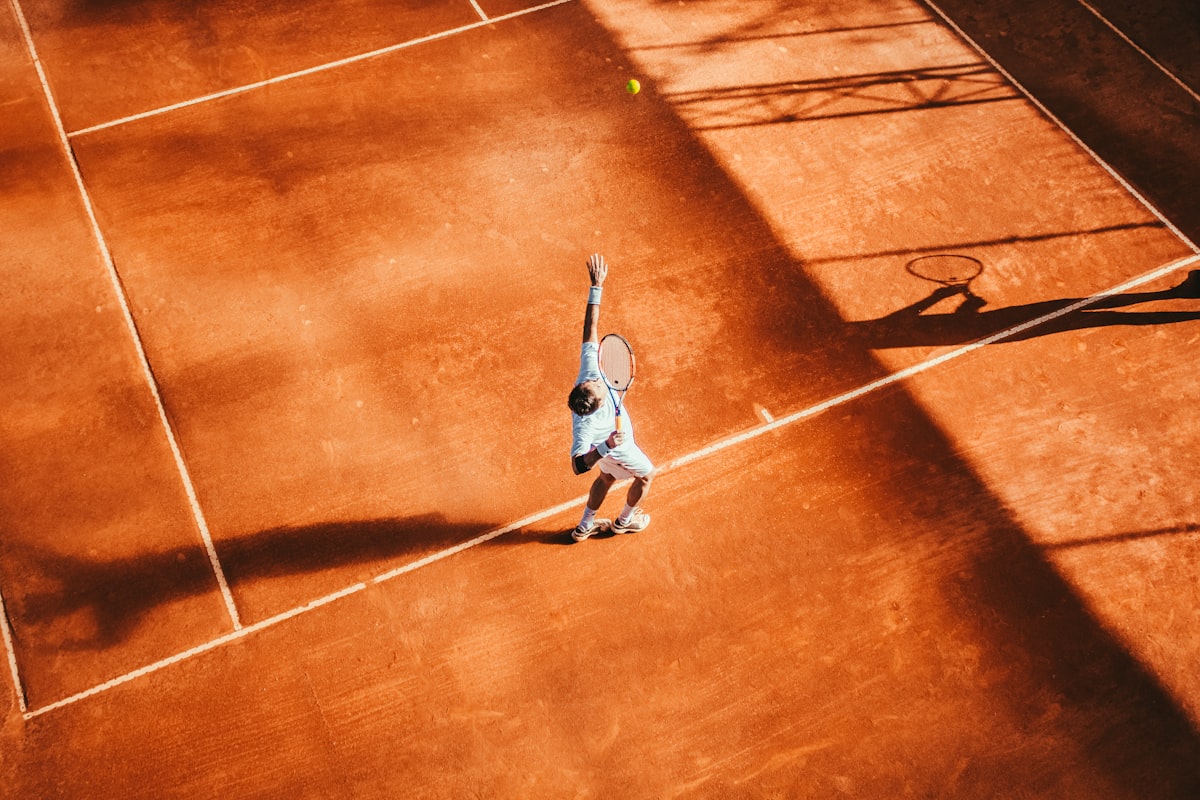
Tennis and squash landed second overall, behind only walking. Their hazard ratio of 0.85 means participants who played regularly had a 15% lower risk of death compared to those who did not, after adjusting for age, body mass index, smoking, diet, and total physical activity volume.
Swimming, despite its reputation as a near-perfect exercise, showed no significant association with lower mortality (HR 1.01, 95% CI 0.97-1.05). The authors noted this may partly reflect measurement limitations in self-reported swimming intensity, but the raw finding was clear.
The Hidden Finding: Variety Matters More Than You Think
The study’s most provocative result was not about any single activity. It was about how many activities you do.
The researchers created a “variety score” — the total number of different exercise types each participant engaged in consistently. After adjusting for total physical activity volume, participants in the highest variety group (five or more activities) had a 19% lower all-cause mortality compared to the lowest group (just one activity).
The effect held across every cause of death: 41% lower cardiovascular mortality, 18% lower cancer mortality, 32% lower respiratory mortality — all with P values below 0.001.
Crucially, the variety benefit was independent of total exercise volume. Two people burning the same number of calories saw different outcomes depending on whether they did one activity or five. As the study’s co-author Yang Hu explained: “There may be extra health benefits to engaging in multiple types of physical activity, rather than relying on a single type alone.”
Anna Whittaker, Professor of Behavioral Medicine at the University of Stirling (not involved in the study), put it simply: different activities have different physiological effects, and variety helps meet the full spectrum of what physical activity guidelines recommend.
Why Racket Sports Rank So High
Tennis and squash outperformed running, cycling, and weight training despite burning fewer calories per session. Three mechanisms explain the gap.
Social integration. Racket sports require a partner or group. The Copenhagen City Heart Study previously found that social sports like tennis add significantly more years to life than solitary activities like jogging or gym workouts. Social isolation itself increases mortality risk by 26%, comparable to smoking 15 cigarettes per day. Every racket sport session is also a social event.
Open-skill cognitive demand. Racket sports are “open-skill” activities — they require constant decision-making, reaction to an opponent, and spatial judgment. Running and cycling are “closed-skill” — repetitive, predictable, cognitively passive. Open-skill exercise triggers brain-derived neurotrophic factor (BDNF) release at levels that closed-skill exercise cannot match, which may contribute to long-term brain health and, indirectly, to survival.
Interval-like exertion. A rally is sprint, pause, sprint, pause. This mirrors high-intensity interval training, which is more time-efficient for cardiovascular fitness than steady-state cardio. The heart rate profile of a competitive racket sport session looks more like intervals than like a jog.
Why Table Tennis Is the Smartest Racket Sport to Add
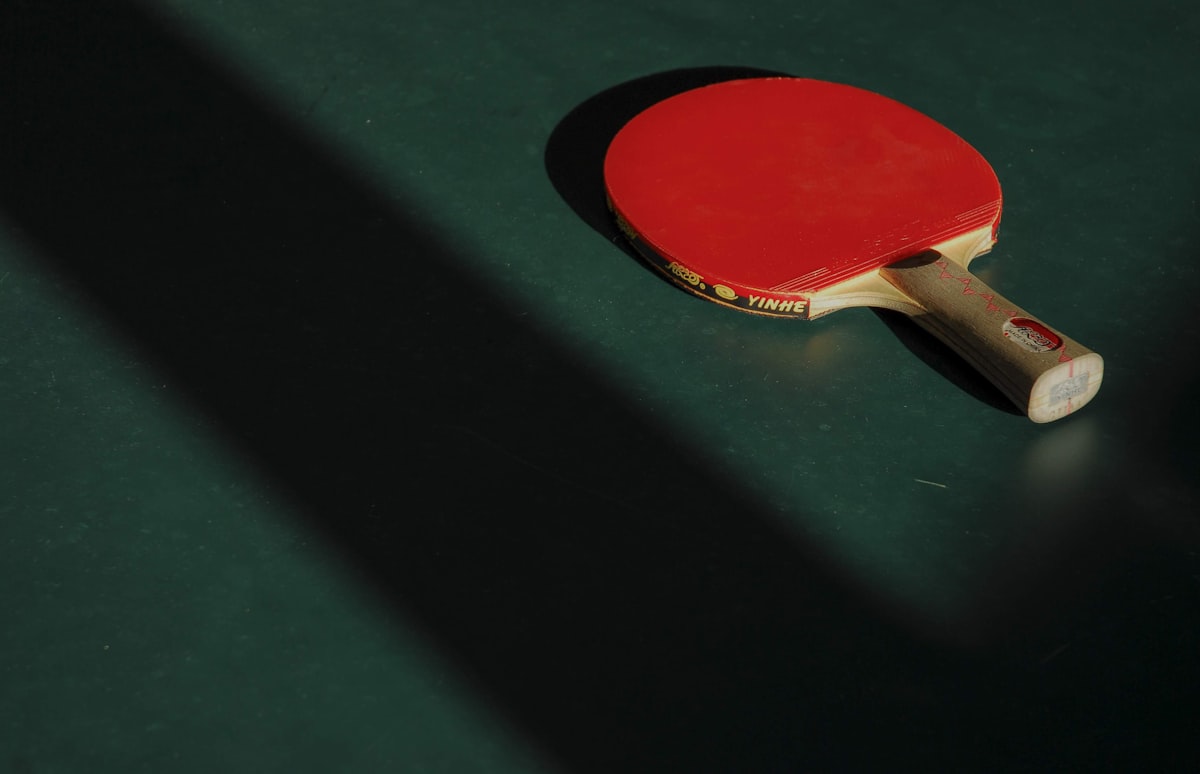
The Harvard study measured tennis and squash specifically. It did not separately track table tennis. But table tennis belongs to the same racket sport category and shares the same three mechanisms — social, cognitive, interval-like — that drove the 15% mortality reduction.
What table tennis offers that tennis and squash do not is accessibility with minimal injury risk.
A 2024 systematic review in the International Journal of Sports Medicine analyzed eight studies covering 873 professional table tennis players and found an overall musculoskeletal injury rate of just 3.6%. Even more striking: 64% of injuries caused no time loss from the sport. The incidence was 10 injuries per 1,000 playing hours, with more than half occurring during training rather than competition.
Compare that to badminton, a closely related racket sport. A 2024 systematic review and meta-analysis in Research in Sports Medicine examined 28 studies and 2,435 badminton players. Sprains accounted for 36% of all injuries, and lower-limb injuries dominated at 52%, with ankle injuries the most common. The intensity of badminton’s jumping, lunging, and direction changes places significantly more stress on joints than table tennis, where players move laterally within arm’s reach of a table.
The practical advantage is clear: table tennis delivers the cognitive, social, and cardiovascular benefits of racket sports with the lowest barrier to entry and the lowest injury risk in the category.
How to Use This Research
The Harvard study makes two evidence-based recommendations:
-
Do not rely on a single exercise type. If you currently only walk, only run, or only swim, add a second and third activity. The variety finding shows that diversifying adds a 19% survival advantage on top of whatever your current activity provides.
-
Include a racket sport. Tennis and squash ranked second only to walking for mortality reduction. Table tennis offers the same health mechanisms with lower injury risk, lower cost, and year-round indoor availability. A community center, a garage table, or a local club is all you need.
The takeaway is not that swimming or cycling are useless — they have well-documented cardiovascular benefits that this particular study may have undercaptured. The takeaway is that if you want to maximize longevity, you should stop treating exercise as a single-activity commitment and start treating it as a portfolio. And in that portfolio, a racket sport — ideally table tennis — deserves a prominent position.
Sources:
- Han H, Hu J, Lee DH, et al. “Physical activity types, variety, and mortality: results from two prospective cohort studies.” BMJ Medicine. 2026;5(1):e001513.
- Ko SH, Cha JR, Lee CC, et al. “Musculoskeletal Injuries in Table Tennis during Competition: A Systematic Review.” International Journal of Sports Medicine. 2024;45(4):267-271.
- Marchena-Rodriguez A, Cabello-Manrique D, Ortega-Avila AB, et al. “Aetiology, epidemiology and treatment of musculoskeletal injuries in badminton players: a systematic review and meta-analysis.” Research in Sports Medicine. 2024;32(6):1041-1054.
Peer-Reviewed Sources
- Han H, et al. Physical activity types, variety, and mortality: results from two prospective cohort studies. BMJ Medicine. 2026;5(1):e001513. ↗
- Ko SH, et al. Musculoskeletal Injuries in Table Tennis during Competition: A Systematic Review. International Journal of Sports Medicine. 2024;45(4):267-271. ↗
- Marchena-Rodriguez A, et al. Aetiology, epidemiology and treatment of musculoskeletal injuries in badminton players: a systematic review and meta-analysis. Research in Sports Medicine. 2024;32(6):1041-1054. ↗