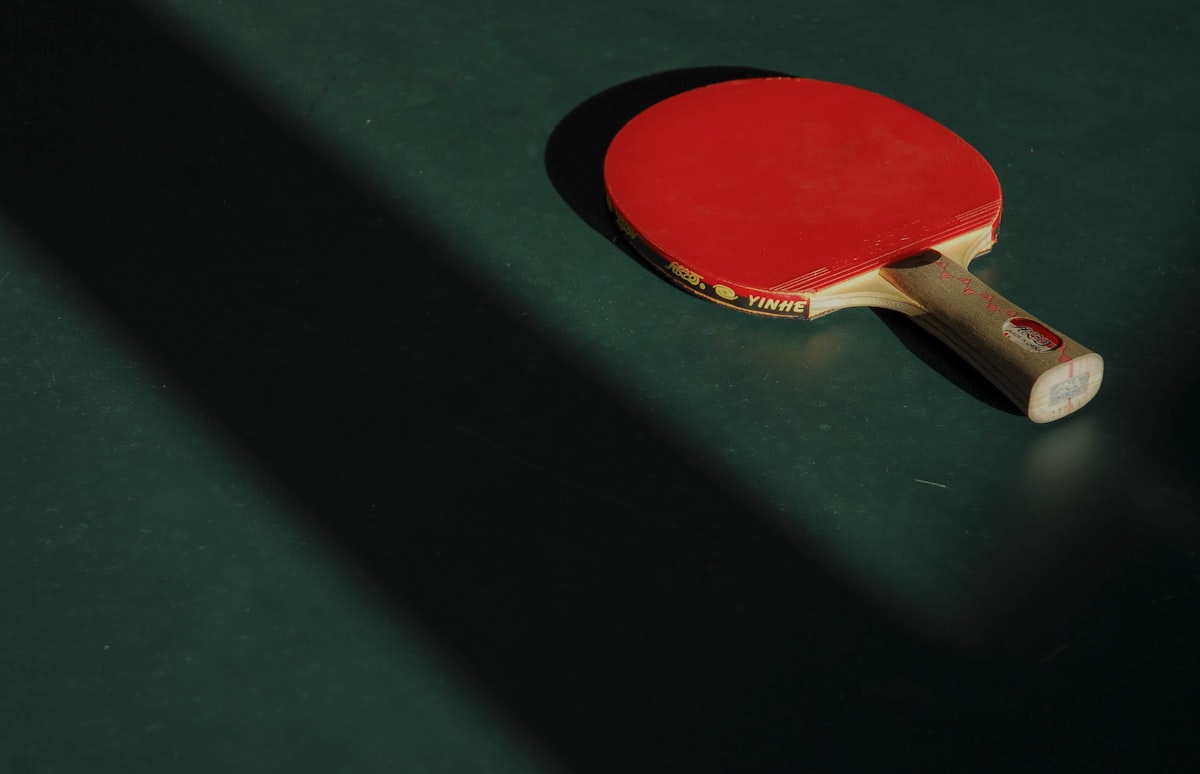
Getting Good at Table Tennis Shields Students With Falling Self-Esteem From Anxiety
An 8-month study of 163 university students found that anxiety climbed in students whose self-esteem declined during the semester, unless they were getting measurably better at table tennis. Skill mastery buffered the anxiety spiral, with the interaction significant at p=0.008. The first longitudinal evidence that table tennis skill gains protect the students most at risk.
DRAFT ARTICLE - Ready for Review
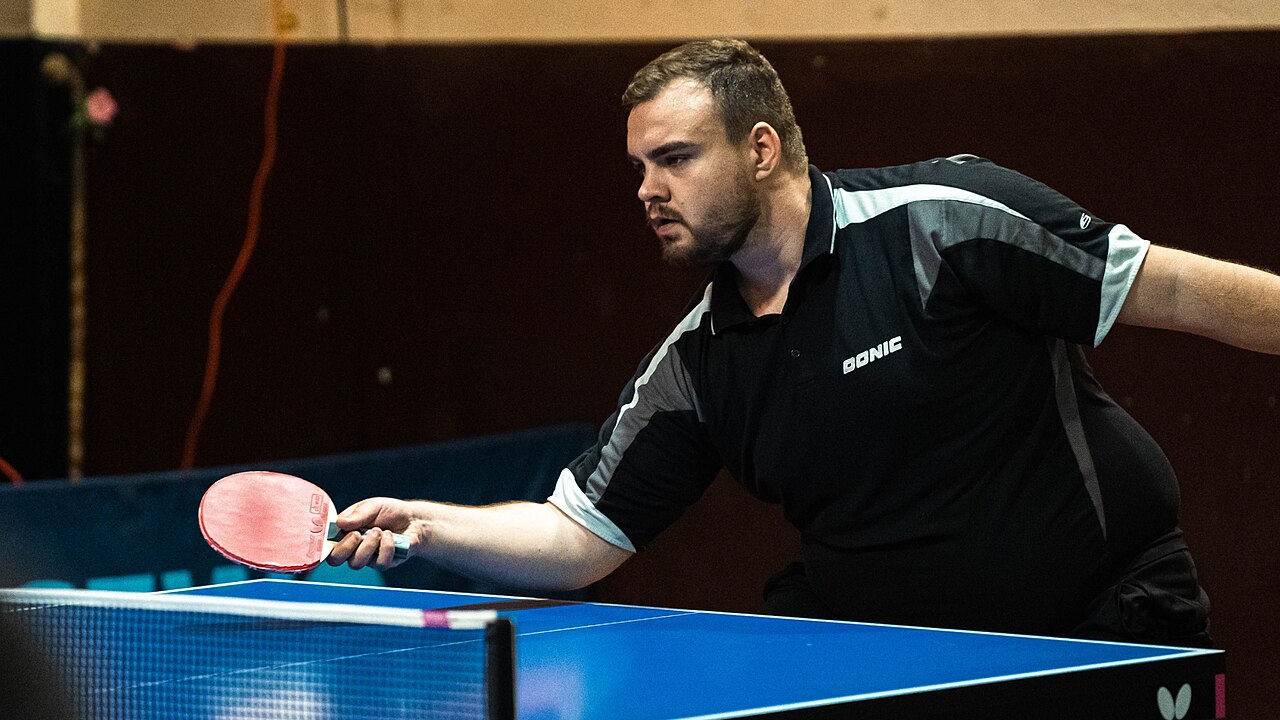
The students most vulnerable to anxiety may be the ones who benefit most from learning table tennis. An 8-month longitudinal study published in SAGE Open Medicine followed 163 university students through a semester of twice-weekly coached table tennis sessions and found that when self-esteem dropped, anxiety climbed, unless the student was getting measurably better at the sport.
The Study
Researchers led by Lin Wang, then at Guilin University of Electronic Science and Technology with collaborators at the University of Exeter, recruited 304 undergraduate volunteers and screened out anyone with a diagnosed anxiety disorder, depression, or prior table tennis training. Of the 264 students who completed baseline testing, 163 finished the full 8-month follow-up between September 2020 and June 2021.
The program was ordinary, by design. Students attended one weekly physical education class and two optional 90-minute table tennis sessions per week, run by a university coach. Sessions covered warm-up runs, forehand and backhand instruction, and match play. At the end, skill was scored objectively: students had one minute to land as many forehand strikes as possible on the opponent’s half of the table, plus performance across 10 rounds of matched play, on a scale adapted from the Chinese Table Tennis Association’s nine-level grading system.
Every student also completed four validated questionnaires at baseline and at 8 months: the General Self-Efficacy Scale, the Rosenberg Self-Esteem Scale, the Connor-Davidson Resilience Scale, and the Hamilton Rating Scale for Anxiety. The researchers controlled for physical activity outside class, sedentary hours, sleep, age, body mass index, and sex.
What Changed Over 8 Months
Two things improved across the group. Self-efficacy, the belief in your own capacity to execute tasks, rose significantly, F(1, 161) = 11.12, p = 0.001. Self-esteem rose too, F(1, 161) = 11.79, p < 0.001. Resilience did not change, and average anxiety scores stayed flat over the 8 months, F(1, 161) = 0.31, p = 0.576.
The flat average is where a lesser study would have stopped. Instead, the researchers asked a sharper question: not whether anxiety fell on average, but what determined which students got more anxious and which did not.
The correlational answer was psychological. Change in anxiety tracked change in self-efficacy (r = -0.30, p < 0.001), change in self-esteem (r = -0.23, p = 0.004), and change in resilience (r = -0.17, p = 0.028). Raw physical activity levels showed no direct link to anxiety at all. What mattered was not how much students moved, but what the sport did to their self-image.
The Finding That Matters
The core result came from a moderation model that controlled for baseline anxiety, baseline psychology, age, BMI, sex, sedentary hours, and sleep. The full model explained just over half the variance in anxiety change, R2 = 0.54, F(13, 149) = 5.16, p < 0.001.
Inside it sat a significant interaction between table tennis performance and change in self-esteem, F(1, 149) = 7.30, p = 0.008. Unpacked with simple slope analysis, the pattern was striking. Among students whose self-esteem declined over the semester, higher table tennis performance predicted less anxiety growth (t = -2.43, p = 0.016). Among students whose self-esteem rose, table tennis skill made no difference to anxiety (t = 1.59, p = 0.115).
In plain terms: falling self-esteem is a well-known escalator toward anxiety in young adults. This study suggests that getting visibly better at table tennis put a brake on that escalator, and only for the students riding it. The skill itself, scored in forehand strikes and match wins, carried the protective association, with a main-effect coefficient of -0.72 (p = 0.005) in the model.
The authors argue the mechanism is specific to how table tennis is trained: repetitive drilling of strokes until they become automatic under pressure, building a sense of competence that generalizes. Because the sport has a low entry barrier, low injury risk, and objectively countable improvement, it offers students a clean feedback loop that team sports can muddle with social comparison.
Consistent With Wider Evidence
The finding slots into a growing pattern. A 4-month randomized comparison published in Scientific Reports in 2025 tracked 241 adolescents through university courses in golf, basketball, or table tennis and found the table tennis group significantly reduced depression scores on a standard rating scale (t = 2.624, p < 0.05), while also posting the largest lung-capacity gain of the three sports. A 2025 review in Healthcare covering 329 players catalogued emotional and social advantages that run alongside the physical ones, and flagged mastery experiences as a recurring theme.
What makes the SAGE Open Medicine study different is time and vulnerability. Most exercise-and-mood research measures average change over weeks. This one watched individual trajectories for 8 months and identified who was actually protected: not the confident students, who were fine either way, but the students losing confidence, for whom measurable skill at table tennis interrupted the slide.
Limitations Worth Knowing
The sample skewed male (81.6%), came from a single university, and the dropout of 101 students, though shown not to differ in baseline anxiety from completers, still shrank the sample. The moderation analysis was exploratory, and the observational design cannot prove causation the way a randomized trial can. Self-esteem and anxiety were self-reported, and the study ran during the COVID-19 recovery period, which may have amplified mood volatility.
The Practical Takeaway
For students, the message is concrete. Casual hitting helps, but the protective effect in this study tracked scored improvement, the forehand strikes you can count week over week. Structured practice with measurable progress appears to be the active ingredient, not just time near a table.
For parents and physical educators, it is a case for keeping table tennis in school programs specifically for the students struggling with confidence. The sport’s low barrier to entry and rapid, visible skill gains make it unusually well suited to deliver the mastery experience that buffers anxiety when self-esteem takes a hit.
Sources
- Wang L, Zhang T, Huang W, Gou L, Zhong M, Liu Q, Liu Y. “How to reduce anxiety symptoms through individual sport in youth: A longitudinal study over 8-month observation.” SAGE Open Medicine. 2024;12:20503121241258736. DOI: 10.1177/20503121241258736
- Yu D, Shimura M, Kawanishi M. “Influence of different training regimens and regular exercise habits on physical strength, anxiety, and depression in adolescents.” Scientific Reports. 2025;15:24016. DOI: 10.1038/s41598-025-09793-3
- Aparicio-Chueca P, Muñoz-Vila N. “Table Tennis for Health: A Multidimensional Perspective on Its Physical, Emotional, and Social Advantages.” Healthcare. 2025;13(18):2352. DOI: 10.3390/healthcare13182352
Peer-Reviewed Sources
- Wang L, Zhang T, Huang W, Gou L, Zhong M, Liu Q, Liu Y. How to reduce anxiety symptoms through individual sport in youth: A longitudinal study over 8-month observation. SAGE Open Medicine. 2024;12:20503121241258736. DOI: 10.1177/20503121241258736. PMID: 38895545. ↗
- Yu D, Shimura M, Kawanishi M. Influence of different training regimens and regular exercise habits on physical strength, anxiety, and depression in adolescents. Scientific Reports. 2025;15:24016. DOI: 10.1038/s41598-025-09793-3. PMID: 40617984. ↗
- Aparicio-Chueca P, Muñoz-Vila N. Table Tennis for Health: A Multidimensional Perspective on Its Physical, Emotional, and Social Advantages. Healthcare. 2025;13(18):2352. DOI: 10.3390/healthcare13182352. PMID: 41008481. ↗