Racket Sports Cut Depression Odds 28% Versus Walking-Type Exercise in Study of 79,011 Students
A study of 79,011 Chinese university students found that two-player racket sports, with table tennis named first in the category, were the third most protective exercise type for mental health behind team ball sports and anaerobic training. Racket players had 28% lower odds of depression than walkers and yoga types, and the data pinpointed an optimal dose of three to four sessions per week.
DRAFT ARTICLE - Ready for Review
When researchers want to know whether exercise helps mental health, they usually lump all exercise together. A study published in June 2026 in General Psychiatry took a different approach: it asked which kind of exercise matters most, in one of the largest sport-versus-sport mental health comparisons ever conducted. The answer puts table tennis’s corner of the sports world near the top of the list.
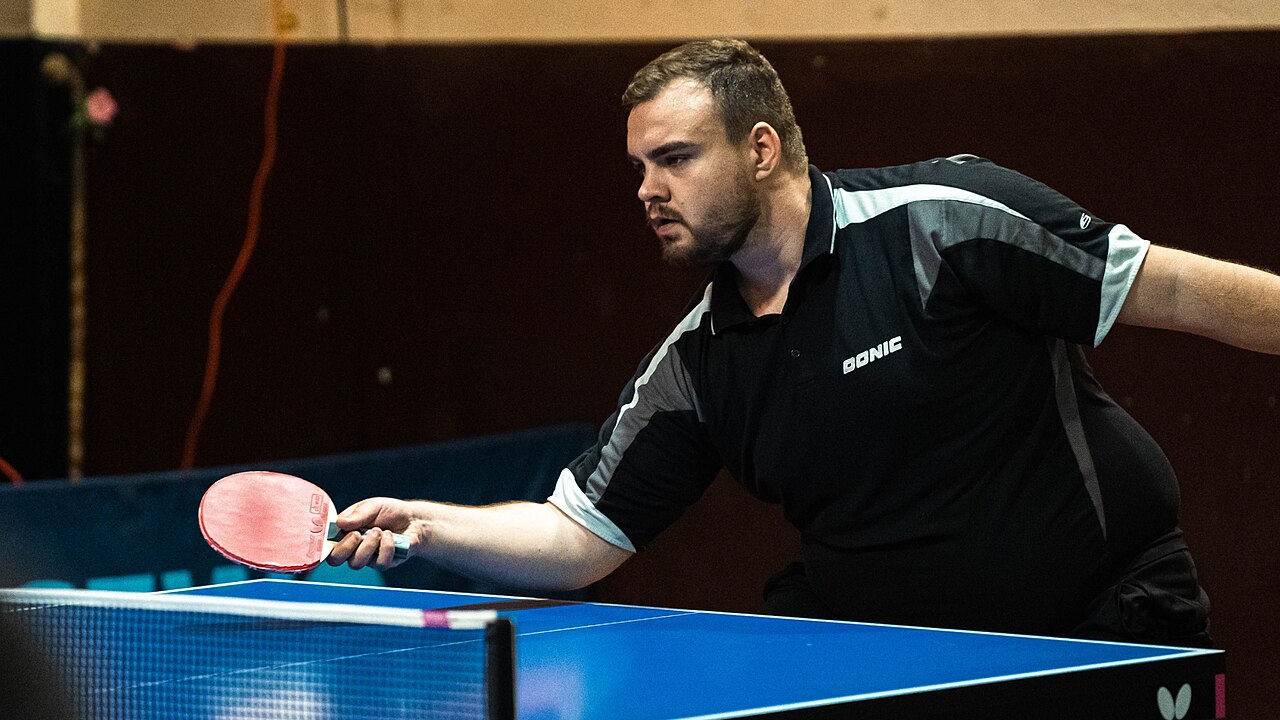
The study surveyed 79,011 university students across 63 universities in Jilin Province, China, in late 2021. Each student named the single activity they spent the most time on, choosing from six categories. One of those categories was “two-player racket sports,” defined in the questionnaire as table tennis, badminton, and tennis, with table tennis listed first. It was the single most popular category in the cohort: 20,000 students, roughly a quarter of the entire sample, called a two-player racket sport their main form of exercise.
What the Researchers Found
The research team, spanning Beijing Forestry University, Tsinghua University’s School of Public Health, and a World Health Organization collaborating center for suicide prevention, compared five exercise categories across six mental health outcomes: depression, anxiety, post-traumatic stress disorder, nonsuicidal self-injury, suicidal ideation, and suicide attempts. To make the comparison fair, they used propensity score matching to balance the groups on age, sex, BMI, household income, parental education, smoking, drinking, and other confounders before running logistic regressions.
The resulting hierarchy was consistent. Team ball sports showed the strongest protective associations, followed by single anaerobic activities like weightlifting and sprinting, then two-player racket sports, then moderate-intensity aerobic exercise like running and swimming, and finally low-intensity aerobic exercise like walking, Tai Chi, and yoga.
The racket sport numbers against the aerobic categories were substantial. Compared with students whose main exercise was low-intensity aerobics, the racket sport players had:
- 28% lower odds of depression (OR 0.72, 95% CI 0.66–0.77, p < 0.001)
- 32% lower odds of anxiety (OR 0.68, 95% CI 0.62–0.75, p < 0.001)
- 25% lower odds of nonsuicidal self-injury (OR 0.75, 95% CI 0.69–0.81, p < 0.001)
- 23% lower odds of suicidal ideation (OR 0.77, 95% CI 0.73–0.81, p < 0.001)
- 26% lower odds of suicide attempts (OR 0.74, 95% CI 0.64–0.86, p < 0.001)
- 14% lower odds of PTSD (OR 0.86, 95% CI 0.81–0.92, p < 0.001)
Racket sports also beat moderate-intensity aerobics on every outcome: 11% lower odds of depression (OR 0.89, 95% CI 0.83–0.96), 19% lower odds of anxiety (OR 0.81, 95% CI 0.74–0.89), and 20% lower odds of suicide attempts (OR 0.80, 95% CI 0.70–0.93), all statistically significant.
Only two categories performed comparably or better. Single anaerobic training was roughly even with racket sports on most measures, and team ball sports retained an edge on suicidal ideation (OR 0.80, 95% CI 0.76–0.85), depression (OR 0.86, 95% CI 0.79–0.93), and PTSD (OR 0.90, 95% CI 0.85–0.96) when compared head-to-head against racket play.
The Sweet Spot: Not Too Much, Not Too Little
The study’s second major finding concerns dose. Using generalized additive models, the researchers found U-shaped relationships between exercise volume and mental health for racket sports on every one of the six outcomes (all p < 0.001 for frequency; all p at or below 0.036 for duration). Benefit climbed with more play, peaked, then reversed.
The sweet spot across exercise types was three to four sessions per week at 90 to 120 minutes per session. Beyond five sessions per week or 150 minutes per session, mental health scores started getting worse, not better. For the dedicated club player who logs two-hour sessions six days a week, that is a genuinely counterintuitive result: the data says the fifth and sixth sessions buy no additional mental health benefit and may cost some.
Why Two-Player Racket Sports Perform
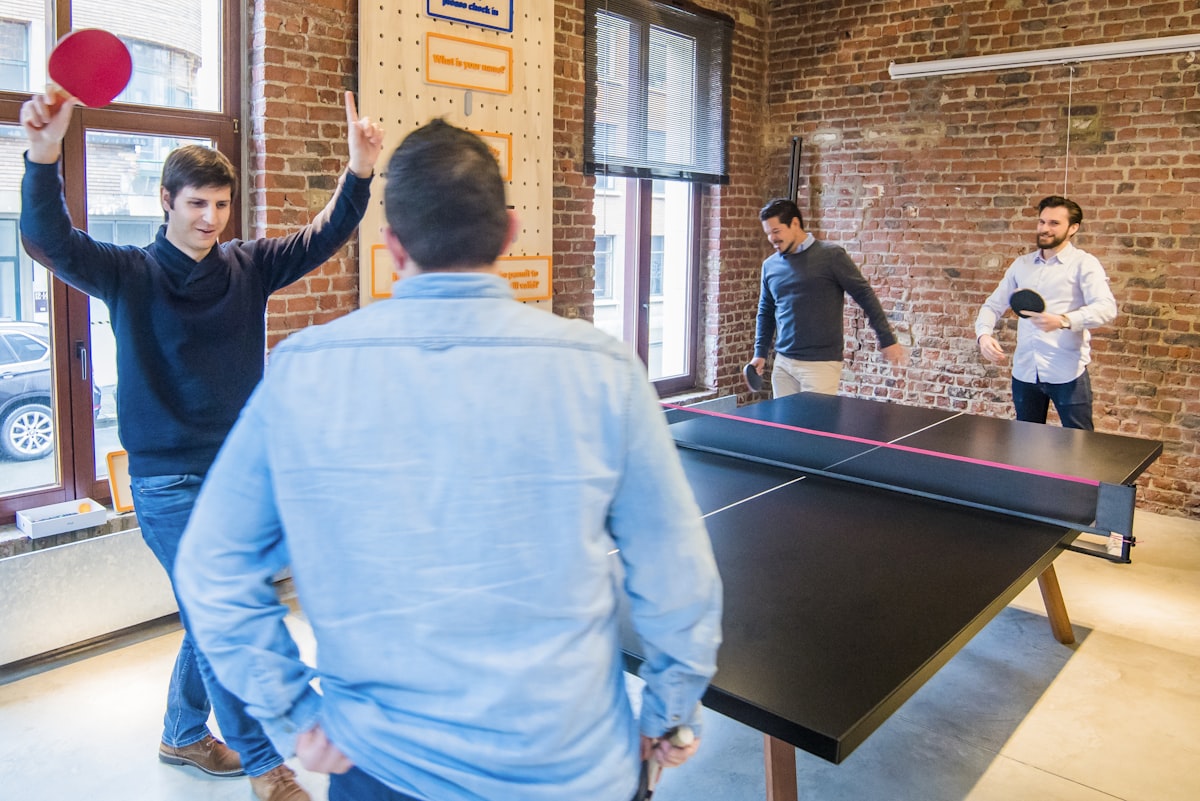
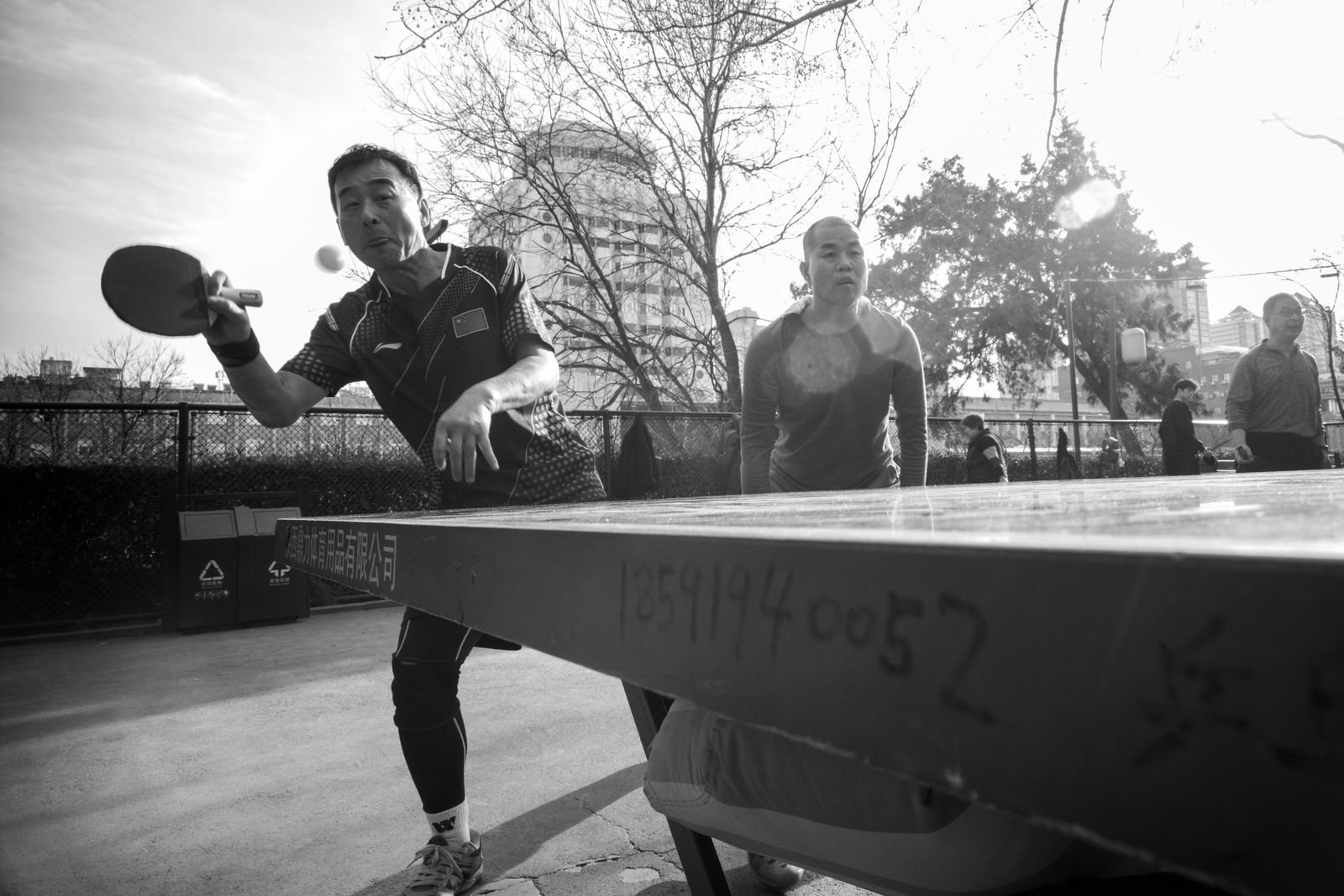
The authors frame the hierarchy through two overlapping pathways. Physiologically, different modalities engage different neural systems: aerobic work biases the motor cortex, while intense intermittent activity engages the prefrontal lobe, a region central to emotional regulation. Socially, sports vary in how much structured human interaction they demand. Table tennis sits in an interesting middle position: it delivers face-to-face, paired interaction, an opponent across the table on every point, without requiring an organized league the way volleyball or basketball do.
That combination appears to travel. The findings line up with a landmark 2018 analysis of 1.2 million Americans published in The Lancet Psychiatry, which found team sports associated with the fewest poor mental health days of any exercise category, with racket-type activities also near the top and popular solo aerobic activities mid-pack (Chekroud et al., 2018). The Chinese cohort extends that picture to younger adults and to harder outcomes, including self-injury and suicidal ideation.
For table tennis specifically, the mental health data now sits alongside cognitive evidence: a 2026 meta-analysis of 14 randomized controlled trials found table tennis interventions improve cognition as well as motor function and balance in participants across age groups (Healthcare, 2026).
The Honest Caveats
Three limitations matter. First, the design is cross-sectional: it shows racket players have better mental health, not that rackets caused it. People who already feel good may be more likely to seek out partners and play. Second, every participant in the analysis exercised; the study ranked exercisers against exercisers and included no couch-potato control group, so it says nothing about exercise versus nothing. Third, the effect sizes are modest by clinical standards, odds ratios mostly between 0.7 and 1.0, which the authors attribute to the nonclinical sample and the strictness of the matched comparisons.
The category also pools table tennis with badminton and tennis, so the study cannot separate the three sports. But with table tennis listed first in the questionnaire and played by more people than either of the others in China, the racket category’s ranking is, to a first approximation, heavily a table tennis result.
What This Means at the Table
If your main exercise is walking, yoga, or another solo low-intensity activity, this study says switching some of that time to a two-player racket sport is associated with meaningfully better mental health odds. If you already play several times a week, the dose data offers permission to rest: three to four sessions appears to be the optimum, and more is not better.
And if you need a partner, that is precisely the point. The study’s core lesson is that the sports best associated with mental health are the ones that come bundled with other people.
Sources
- Wang H, Aku Y, Xu S, Ren Z, Zhang Y, Chen R, An J. Exercise type, dose and mental health outcomes in youth: Which types and doses are sufficient? General Psychiatry. 2026;39(3):e70031. DOI: 10.1002/gps3.70031. PMID: 42293510.
- Chekroud SR, Gueorguieva R, Zheutlin AB, et al. Association between physical exercise and mental health in 1.2 million individuals in the USA between 2011 and 2015: a cross-sectional study. The Lancet Psychiatry. 2018;5(9):739-746. DOI: 10.1016/S2215-0366(18)30227-X. PMID: 30099000.
- Li H, Ahn H, Shin M. Table tennis intervention effects on motor function, balance, and cognition: a meta-analysis of 14 randomized controlled trials. Healthcare (Basel). 2026;14(5):675. DOI: 10.3390/healthcare14050675. PMID: 41827628.
Peer-Reviewed Sources
- Wang H, Aku Y, Xu S, Ren Z, Zhang Y, Chen R, An J. Exercise type, dose and mental health outcomes in youth: Which types and doses are sufficient? General Psychiatry. 2026;39(3):e70031. DOI 10.1002/gps3.70031. PMID 42293510. ↗
- Chekroud SR, Gueorguieva R, Zheutlin AB, et al. Association between physical exercise and mental health in 1.2 million individuals in the USA between 2011 and 2015: a cross-sectional study. The Lancet Psychiatry. 2018;5(9):739-746. DOI 10.1016/S2215-0366(18)30227-X. PMID 30099000. ↗
- Li H, Ahn H, Shin M. Table tennis intervention effects on motor function, balance, and cognition: a meta-analysis of 14 randomized controlled trials. Healthcare (Basel). 2026;14(5):675. DOI 10.3390/healthcare14050675. PMID 41827628. ↗