Core Training Delivers Large Gains in Stability, Agility and Shot Speed for Table Tennis Players, 18-Trial Review Finds
A new meta-analysis of 18 randomized controlled trials finds core strength training produces large improvements in stability, balance and agility in racket sport athletes — plus a measurable boost in ball velocity.
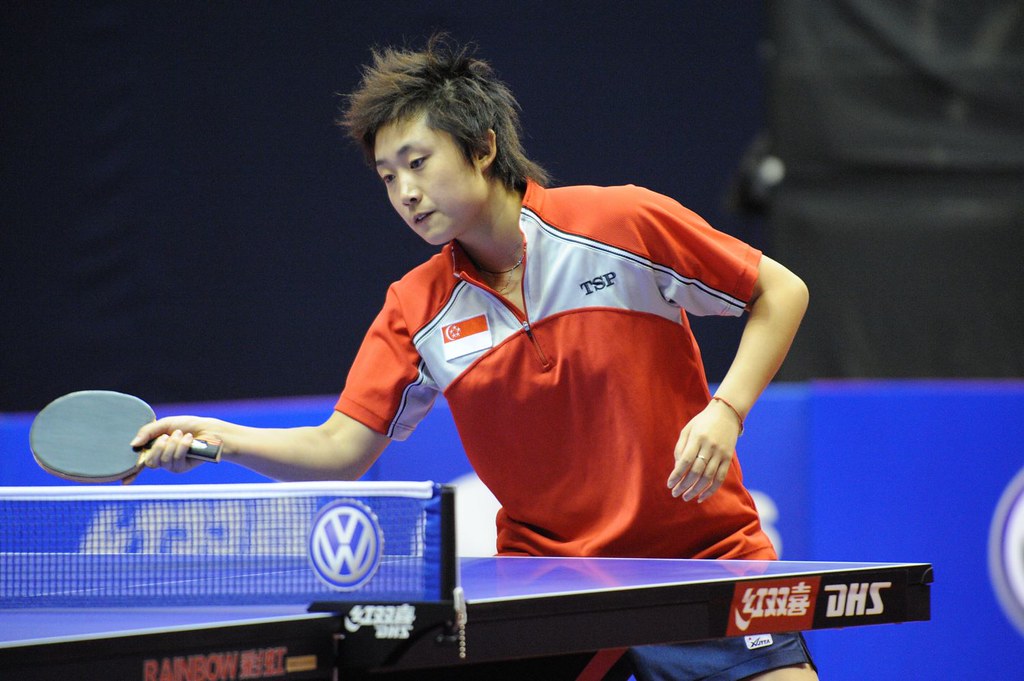
Every table tennis coach says it: the power in your forehand comes from your hips and trunk, not your arm. For the first time, a quantitative review of the entire research record shows just how much difference trunk training makes — and the numbers are bigger than most players would guess.
What the study did
Researchers at Chongqing University and Universiti Putra Malaysia pooled the results of 18 randomized controlled trials of core strength training in racket sport athletes, covering tennis, badminton and table tennis (Scientific Reports, 2026). It is the first meta-analysis to aggregate effect sizes for core training exclusively in racket sports, rather than mixing in runners, swimmers or generic gym-goers.
The trials compared structured core programs — planks, bridges, rotational and anti-rotation work — against control conditions that ranged from regular sport training alone to conventional resistance training. Because each trial measured outcomes differently, the reviewers standardized the results using Cohen’s d, where 0.2 counts as a small effect, 0.5 medium and 0.8 large.
The headline numbers
Across the pooled trials, core strength training produced effects that cleared the “large” threshold on nearly every physical outcome measured:
- Stability: d = 1.87 (95% CI 0.73 to 3.02, p = 0.001) — the biggest effect in the analysis, based on six studies
- Agility: d = 1.22 (95% CI 0.78 to 1.66, p < 0.0001) — with zero heterogeneity, meaning the trials agreed remarkably closely
- Balance: d = 1.16 (95% CI 0.40 to 1.92, p = 0.003) — large, though the trials varied considerably in how they measured balance
- Ball velocity: d = 0.57 (95% CI 0.20 to 0.93, p = 0.0003) — a moderate but consistent improvement in smash and serve speed across six studies
An effect size of 1.2 for agility means the average athlete in a core training group moved faster in change-of-direction tests than roughly 88% of the control athletes — a substantial real-world edge in a sport decided by fractions of a second.
Where the data could not be pooled quantitatively, the direction was still uniform: studies measuring shot accuracy, spin control and core endurance all improved significantly after core training (all P < 0.05).
Why this matters for table tennis specifically
The review’s table tennis trials showed the same pattern. One nine-week randomized trial in national-level table tennis athletes found combined core stability training significantly improved both core stability (P < 0.01) and spin control (P < 0.05) compared with conventional resistance training. A 12-week trial in adolescent table tennis players found large core stability gains (P < 0.01).
The mechanism is the kinetic chain: force generated in the legs travels through the trunk into the racket. A weak or unstable core leaks energy at every transfer. The authors point out that this same trunk-rotation demand is shared across racket sports, which is why table tennis players benefit from core programs validated in tennis and badminton populations — and why weakness there raises injury risk in the shoulders, elbows and spine.
This connects to other recent table tennis work. A 2026 randomized controlled trial found that reactive agility training — footwork drills driven by unpredictable cues — selectively improved choice reaction time and footwork-stroke performance in young table tennis players (Frontiers in Physiology, 2026). Agility and stability are exactly the qualities core training strengthens. And for older and health-focused players, a separate meta-analysis of 14 table tennis interventions found the sport itself improves balance with a standardized mean difference of 0.78 (Healthcare, 2026) — meaning table tennis play and off-table core work appear to reinforce the same physical foundation.
Honest caveats
Two limitations are worth knowing. First, the balance and stability analyses showed high heterogeneity (I² = 91%) — trials used very different tests, so the exact pooled values are less precise than the agility figure. The reviewers ran sensitivity analyses excluding outliers and the effects remained statistically significant, but the confidence intervals are wide. Second, most included trials were modest in size; the review itself flags incomplete reporting of training details in the underlying studies as a source of bias.
And one framing note: the pooled numbers come from racket sports collectively — tennis, badminton and table tennis — while the spin-control and core-stability results above come specifically from the table tennis trials within the review.
Practical takeaway
If you play table tennis and your training is only table tennis, the evidence now says adding two or three core sessions per week is one of the best-supported upgrades available. The trials that worked best used progressive programs of planks, bridges and rotational exercises running 6 to 12 weeks. The rewards show up where the game is actually decided: faster lateral movement, a more stable stroke platform under pressure, and measurably quicker balls.
Sources
- Yu X, Yin H, Zhang J. “Effectiveness of core strength training for racket sport athletes’ performance: a systematic review and meta-analysis.” Scientific Reports 2026;16:7862. DOI: 10.1038/s41598-026-39391-w. PMID: 41663490.
- Zhang M, Zhang W, Tao J, et al. “Reactive agility training selectively improves choice reaction and footwork-stroke performance in young male table tennis players: a randomized controlled trial.” Frontiers in Physiology 2026. PMID: 42798353.
- Li H, Ahn H, Shin M. “Effects of table tennis exercise on motor and cognitive function: a meta-analysis of randomized controlled trials.” Healthcare 2026;14(5):675. PMID: 41827628.
Photo: “Women’s World Cup Table Tennis” by cm.yong, Flickr, CC BY 2.0.
Peer-Reviewed Sources
- Yu X, Yin H, Zhang J. Effectiveness of core strength training for racket sport athletes' performance: a systematic review and meta-analysis. Scientific Reports. 2026;16:7862. DOI: 10.1038/s41598-026-39391-w. PMID: 41663490
- Zhang M, Zhang W, Tao J, Liu Y, Jin R. Reactive agility training selectively improves choice reaction and footwork-stroke performance in young male table tennis players: a randomized controlled trial. Frontiers in Physiology. 2026. PMID: 42798353
- Li H, Ahn H, Shin M. Effects of table tennis exercise on motor and cognitive function: a meta-analysis of randomized controlled trials. Healthcare. 2026;14(5):675. PMID: 41827628


