Neck Pain Cut From 4.1 to 1.3 in 12 Weeks: Combined Fascia Release and Exercise Trial in Young Table Tennis Players
A randomized trial of 40 adolescent table tennis players with neck and shoulder pain found that 12 weeks of fascia knife release therapy combined with exercise cut pain scores by 68%, nearly tripled cervical muscle endurance, and reduced neck disability by 58% — while the control group barely improved.
DRAFT ARTICLE - Ready for Review
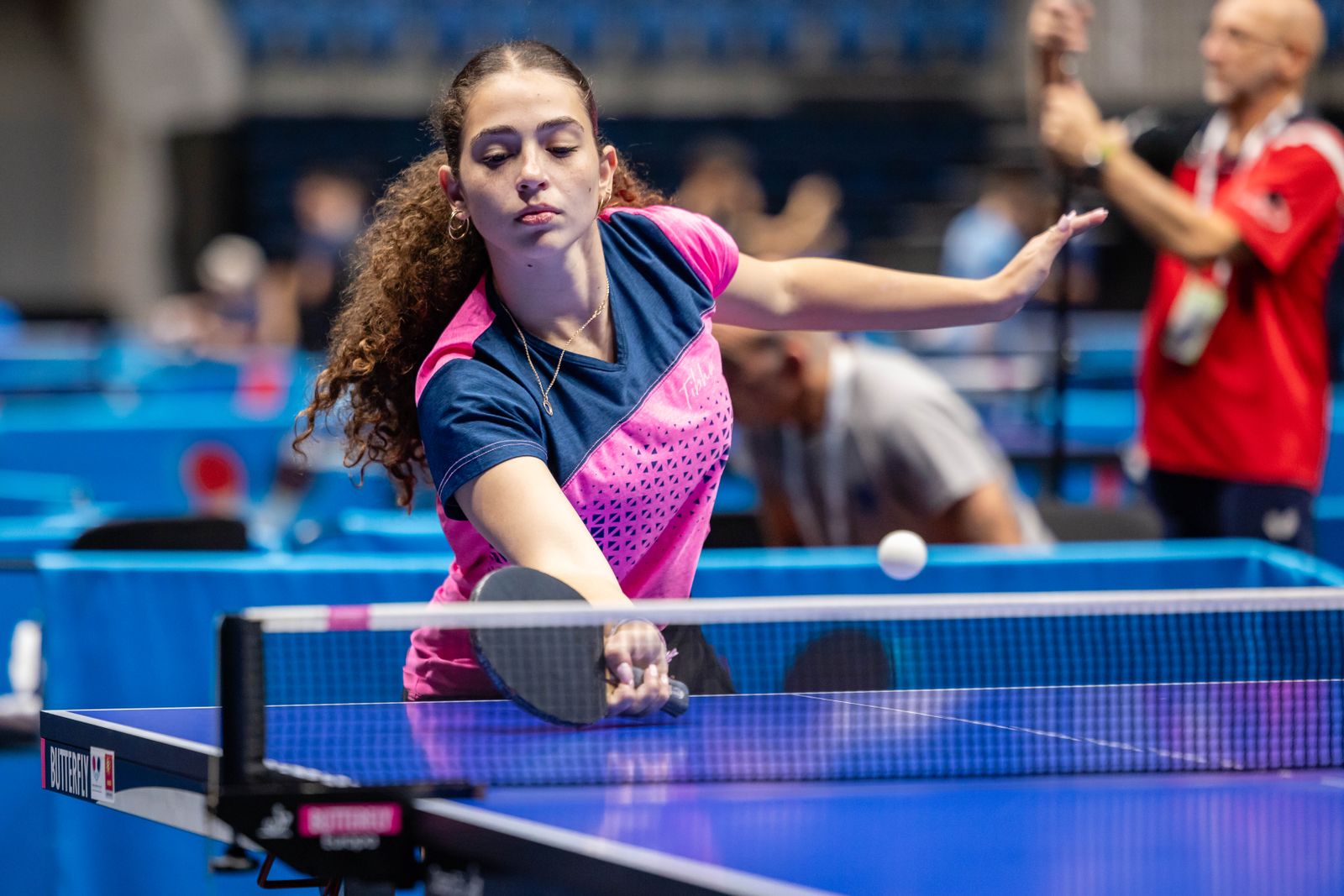
Table tennis has a gentle reputation. Among professional players, the sport’s overall injury rate is just 3.6%, and 64% of injuries cause no lost training time at all (International Journal of Sports Medicine, 2024). But that average hides a quieter problem for young players who train hard: pain that never shows up in an injury report. A new randomized trial from China focused on exactly this group — adolescent table tennis players with persistent neck and shoulder pain — and tested a two-part treatment over 12 weeks. The results, published in Frontiers in Public Health, were striking.
The Study
Researchers at the Anhui Sports Rehabilitation Clinic in Hefei, China, enrolled 40 adolescent table tennis players with neck and shoulder pain during their recovery period in 2024. The players were randomized into two groups of 20. The control group received standard recovery care for 12 weeks. The experimental group received fascia knife release therapy — a manual technique in which a trained therapist uses a specialized metal tool to apply controlled scraping and pressing pressure to the skin and underlying fascia — combined with supervised functional exercise targeting the neck and shoulders.
The average age was about 13 (13.8 in the control group, 12.7 in the treatment group), and players had been training for roughly three to four years. This matters: these were not elite professionals, but school-age athletes already carrying enough repetitive strain to produce chronic pain. French data on high-level young players suggests this is common rather than exceptional — in a 17-year cohort of 139 youth players, overuse injuries dominated, including chronic low back pain in 8.4% and shoulder tendinopathy in 11.6% of those injured (Annals of Medicine and Surgery, 2026).
Three standard clinical measures were taken before and after the 12 weeks:
- VAS (visual analog scale) — pain rated 0 to 10
- CMET (cervical muscle endurance test) — how long the deep neck muscles can hold a position, in seconds
- NDI (neck disability index) — a questionnaire score of how much neck pain interferes with daily life, where higher means worse
What the Researchers Found
The two groups started statistically identical. Before the intervention, pain scores (p = 0.854), endurance (p = 0.393), and disability (p = 0.828) showed no significant differences. Then the 12 weeks did their work.
Pain fell by 68%. The treatment group’s average VAS score dropped from 4.1 to 1.3 — from “moderate pain that can’t be ignored” to “barely noticeable.” The control group went from 4.0 to 3.3, a modest improvement. The between-group difference after 12 weeks was statistically significant (p = 0.001) with a very large effect size (Cohen’s d = 2.57).
Neck muscle endurance nearly tripled. This was the most dramatic result. The treatment group’s cervical muscle endurance test score rose from 12.9 seconds to 34.4 seconds — a 2.7-fold increase. The control group improved from 12.1 to 14.4 seconds. The difference was significant (p = 0.001) with an effect size of d = 4.81, one of the largest you will see in a rehabilitation trial.
Disability fell by 58% — while the control group got slightly worse. The treatment group’s neck disability index dropped from 12.8 to 5.4 points. The control group actually edged up, from 13.7 to 14.3. The between-group difference was significant (p = 0.001, d = 3.86).
One number worth pausing on: the control group’s disability score did not improve at all over three months. For a 13-year-old athlete with neck pain, waiting it out did not work. Structured treatment did.
Why the Combination Likely Matters
The researchers’ reasoning follows the mechanics of the sport. Table tennis involves thousands of repetitive strokes at a table set at a fixed height, with the head and neck held in flexion for long sessions. Over years, this can stiffen the fascia — the connective tissue wrapping the neck and shoulder muscles — restrict sliding between tissue layers, and load the cervical discs. The study’s authors note that neck and shoulder pain in these players is closely related to early cervical disc degeneration.
The two parts of the treatment target the two halves of that problem. The fascia knife work addresses the tissue: the mechanical pressure is thought to promote soft-tissue repair, separate adhered fascial layers, and improve local circulation. The supervised exercise addresses the system: stronger deep neck muscles mean better support for the cervical spine during those long sessions at the table. Neither alone was tested in this trial — that’s an important limitation — but the combination produced gains that standard recovery care did not come close to.
Honest Caveats
This was a small, exploratory trial — 40 players at a single clinic, with no blinding described, and the control group’s exact treatment (described as both medication and recovery exercise in different parts of the paper) is not reported in detail. The authors themselves label the design prospective and exploratory. The effect sizes (d = 2.57 to 4.81) are far larger than typical for rehabilitation interventions, which usually signals a small sample and possible overestimation. Treat the exact numbers as promising rather than definitive.
That said, all three outcome measures moved in the same direction, all reached p = 0.001, and the control group’s flat trajectory makes the contrast hard to dismiss.
What It Means for Players and Parents
If a young table tennis player has neck or shoulder pain that has lingered for months, the evidence now points toward active treatment rather than rest: myofascial release work by a qualified therapist, combined with supervised neck and shoulder strengthening. The endurance gains are arguably the most important finding — stronger neck muscles protect the spine as training loads increase, and the trial suggests these muscles respond quickly to targeted work.
And the broader lesson from the injury data stands: table tennis remains one of the safest sports you can play. But “safe” is not “free of strain,” and for growing bodies repeating the same stroke thousands of times a week, neck pain deserves the same structured attention as any other sports injury.
Sources
- Li Y, Zhang S, Li J, Wu X. Effects of 12 weeks of fascia knife release therapy in combination with exercise for treating neck and shoulder pain in adolescent table tennis players. Frontiers in Public Health, 2025.
- Bonhomme C, et al. Table tennis musculoskeletal injuries in young high-level players: a 17-year retrospective cohort study. Annals of Medicine and Surgery, 2026.
- Ko SH, et al. Injury epidemiology in professional table tennis players. International Journal of Sports Medicine, 2024.
Peer-Reviewed Sources
- Li Y, Zhang S, Li J, Wu X. Effects of 12 weeks of fascia knife release therapy in combination with exercise for treating neck and shoulder pain in adolescent table tennis players. Frontiers in Public Health. 2025;13:1679219. DOI 10.3389/fpubh.2025.1679219. PMID 41170490. ↗
- Bonhomme C, Menu P, Grondin J, Hirardot T, Dauty M, Fouasson-Chailloux A. Table tennis musculoskeletal injuries in young high-level players: a 17-year retrospective cohort study. Annals of Medicine and Surgery. 2026;88(8):4828-4835. DOI 10.1097/MS9.0000000000005269. PMID 42583567. ↗
- Ko SH, et al. Epidemiology of injuries in table tennis: injury rates, 873 professional players. International Journal of Sports Medicine. 2024;45(4):267-271. DOI 10.1055/a-2175-6509. PMID 37871618. ↗


