Table Tennis Made It Into Nature Medicine: 8 Weeks of Play Cut Roughly 5 kg of Fat Mass in Teens With Obesity
When researchers at some of China's top medical institutions needed a sport strong enough to test as obesity medicine in a Nature Medicine trial, they chose table tennis. In a 227-adolescent randomized controlled trial, eight weeks of real table tennis or soccer training cut fat mass by 5.06 kg more than a control group, and a virtual reality version of table tennis came within 0.8 kg of the real thing with roughly half the injury rate.
DRAFT ARTICLE - Ready for Review
When one of the world’s most selective medical journals went looking for a sport powerful enough to test as a treatment for adolescent obesity, table tennis made the cut. A randomized controlled trial published in Nature Medicine in July 2025 assigned 227 adolescents with excess body weight to eight weeks of training built around table tennis and soccer, and the results were striking: young people in the real-world sport groups lost an average of 5.06 kg more fat mass than the control group, with improvements in liver enzymes and cholesterol on top.
What the Trial Did
The REVERIE trial (Real-World Exercise and VR-Based Exercise Research in Education), run by a consortium that included Tsinghua University and the China Table Tennis College at Shanghai University of Sport, enrolled 227 adolescents with overweight or obesity. Each was randomly assigned to one of five groups: physical table tennis, physical soccer, virtual reality table tennis, virtual reality soccer, or a control group that continued routine physical education classes.
Training was practical and repeatable, not a laboratory artifact. Sports groups attended 45-minute classes three times per week for eight weeks, with a progressive four-stage curriculum. The table tennis program moved through forehand attack practice, flat serves, backhand pushes, and finally backhand push into forehand attack. Every group, including controls, received the same dietary counseling, so the differences between groups reflect the exercise itself rather than diet.
The coaching standards were serious. The trial convened a panel of ten certified coaches, and the table tennis panel was chaired by an Olympic champion.
The Headline Numbers
Fat mass, measured by bioelectrical impedance after overnight fasting, was the primary outcome. After eight weeks:
- Real-world sports training (table tennis or soccer) cut fat mass by 5.06 kg more than the control group (95% CI -7.13 to -2.98, p < 0.001)
- VR sports training cut fat mass by 4.28 kg more than control (95% CI -6.35 to -2.22, p < 0.001)
- There was no statistically significant difference between the real and virtual versions
Beyond the scale, both sport groups showed significant drops relative to control in body weight, in liver enzymes (alanine aminotransferase and gamma-glutamyl transferase, markers linked to fatty liver disease), and in LDL cholesterol, the “bad” cholesterol that drives long-term cardiovascular risk.
Injury rates favored the virtual net: 7.69 percent of VR participants reported minor injuries versus 13.48 percent in the physical sport groups, and there were no serious adverse events in either. Benefits in the VR group were still detectable at a six-month follow-up.
Table Tennis Pulled Its Weight
The trial pooled its two sports for its headline statistics, so it cannot claim table tennis alone beat soccer. But table tennis was one of only two sports the investigators judged suitable, and the table tennis sessions were demonstrably intense. Heart-rate monitoring during VR table tennis sessions averaged 78.01 percent of age-predicted maximum heart rate, squarely in the moderate-to-vigorous zone public health guidelines recommend, with a rating of perceived exertion of about 13 on the 6-to-20 Borg scale.
There was also a cognitive bonus. In exploratory analyses, the VR sports groups improved more than the physical sports groups on working memory (2-back accuracy improved by 10.88 percentage points, 95% CI 1.19 to 20.56), and brain imaging suggested gains in neural efficiency.
Part of a Bigger Pattern
The Nature Medicine trial is the largest and most prestigious signal yet for a finding that keeps replicating at smaller scales. A 2026 meta-analysis of 14 randomized controlled trials covering 1,565 participants found table tennis interventions improved balance (standardized mean difference 0.78) and cognitive function (SMD 2.05) across age groups (Healthcare, 2026). And in a recent randomized trial in children with ADHD plus developmental dyslexia, twelve weeks of table tennis training three times weekly beat track-and-field training on measures of inhibitory control, including the most demanding Stroop condition, where reaction time improved from roughly 61 seconds to 43 seconds (BMC Pediatrics, 2026).
What This Means for You
Three practical takeaways emerge. First, table tennis is genuine exercise medicine: played at intensity three times a week, it produced fat loss comparable to soccer in a population that struggles to be active. Second, the dose used here is realistic, 45 minutes a session, with drills a club coach would recognize. Third, for people deterred by injury risk, access, or self-consciousness, the VR findings suggest a racket in virtual reality retains most of the benefit at roughly half the injury rate, and the effects persisted for at least six months.
Adolescent obesity is one of the hardest problems in medicine, and pharmacological options are expensive and scarce. A paddle, a table, and three sessions a week just produced a five-kilogram result in the journal that sets the bar for clinical evidence.
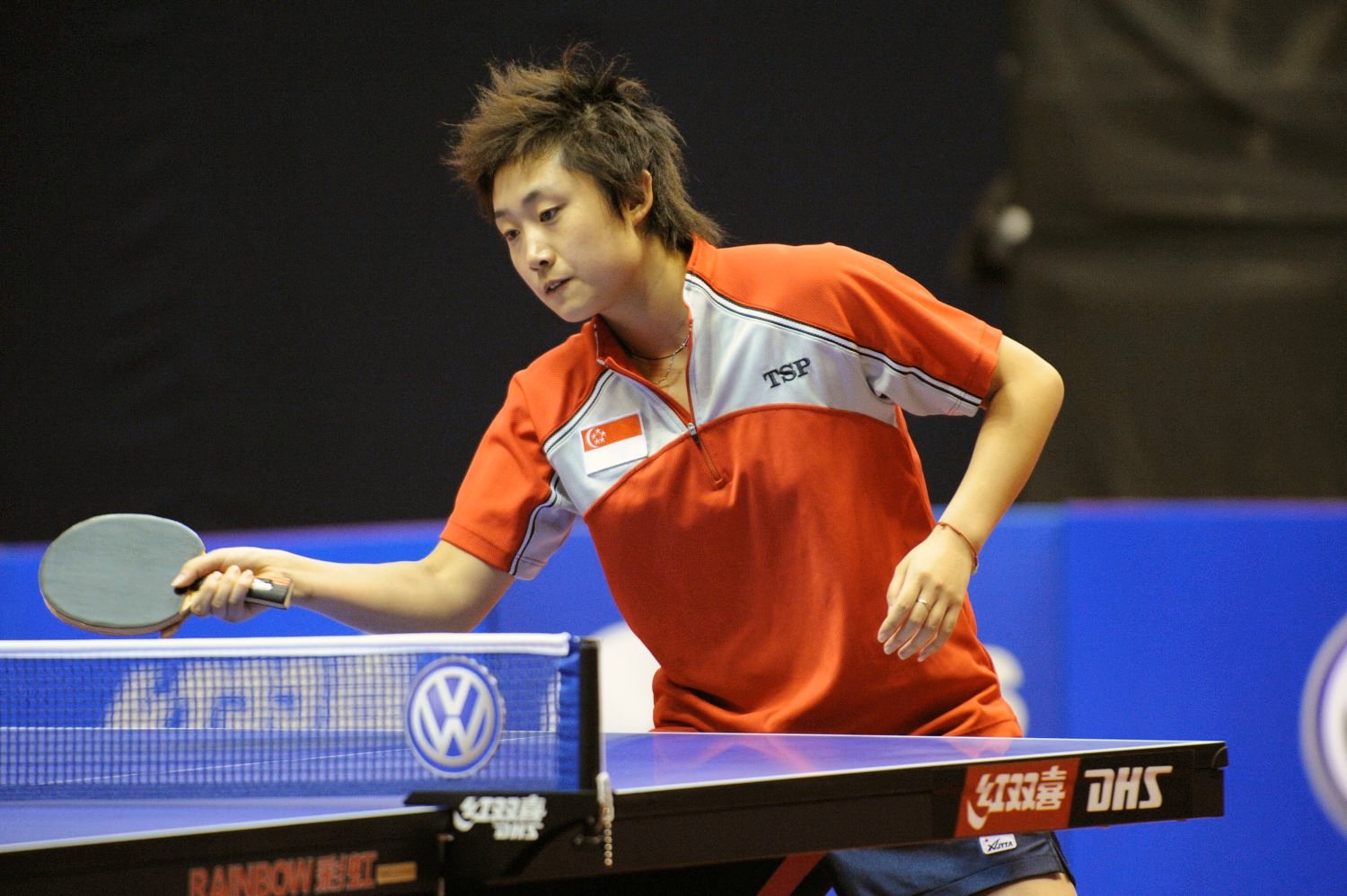
Image: Yong Chee Meng, CC BY 2.0, via Wikimedia Commons.
Peer-Reviewed Sources
- Wang J, Qin Y, Wu Q, Zeng D, Gao X, Wang Q, et al. An adaptive AI-based virtual reality sports system for adolescents with excess body weight: a randomized controlled trial. Nature Medicine. 2025;31(7):2255-2268. DOI: 10.1038/s41591-025-03724-5. PMID: 40551019. ↗
- Li H, Ahn H, Shin M. Table tennis as a sustainable health intervention: a meta-analysis of its effects on balance and cognitive functions. Healthcare (Basel). 2026;14(5):675. DOI: 10.3390/healthcare14050675. PMID: 41827628. ↗
- Quan T, Ye J, Yu Q, Zhu F, Zhang L. Comparative effectiveness of 12-week open- and closed-skill exercises on executive function in children with ADHD and developmental dyslexia: a randomized controlled trial. BMC Pediatrics. 2026;26(1):775. DOI: 10.1186/s12887-026-07105-w. PMID: 42289665. ↗