35,096 ER Visits in 20 Years: Your Own Paddle Is the Top Table Tennis Hazard
The first 20-year analysis of table tennis injuries in U.S. emergency departments found roughly 1,755 ER visits per year — and the most common serious injury is a cut to the face, caused more often by a paddle strike than by anything else. The authors say protective eyewear deserves a closer look.
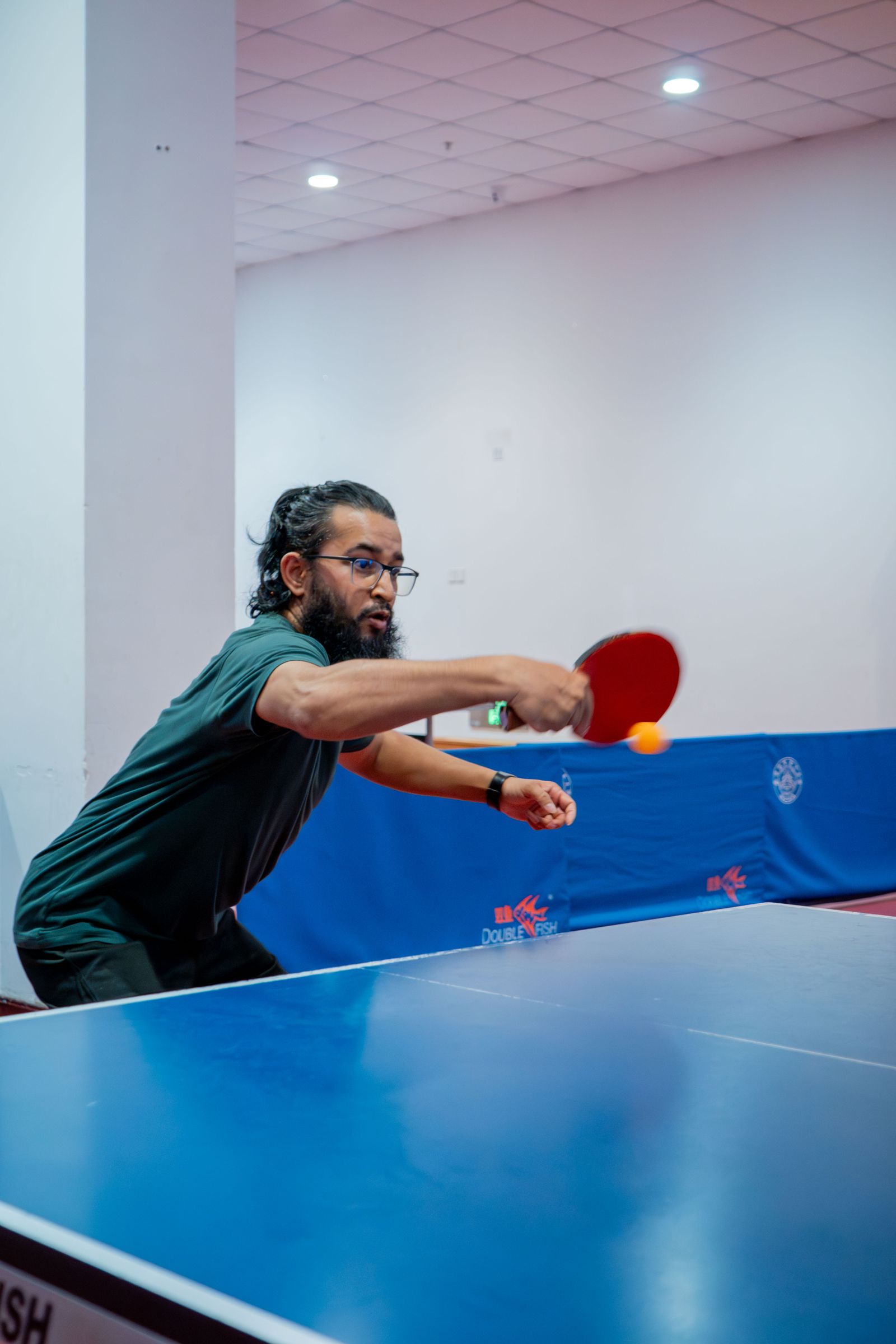
DRAFT ARTICLE - Ready for Review
Table tennis has a safety reputation most sports would envy. A new 20-year analysis of United States emergency department data largely confirms it — but with one finding that would surprise most recreational players: the single most common injury pattern in the sport is a cut to the face, and in most of those cases, the object that caused it was a paddle, not a fall.
The study, published in the Rhode Island Medical Journal, is the first to map table tennis injuries across the full U.S. emergency department system over two decades (Zhao et al. 2026, PMID 42945525).
What the researchers did
The team analyzed data from the National Electronic Injury Surveillance System (NEISS), a probability sample of roughly 100 U.S. hospitals maintained by the Consumer Product Safety Commission. Because each recorded case carries a statistical weight, the sample can be projected into national estimates.
The researchers pulled every emergency visit coded as table tennis-related from January 1, 2005 through December 31, 2024 — 910 sampled cases in total — and weighted them into national figures, then stratified the results by age, sex, diagnosis, body region, and disposition.
The headline numbers
Over 20 years, U.S. emergency departments treated an estimated 35,096 table tennis injuries (95% CI: 33,341–36,851) — an average of about 1,755 visits per year. The annual incidence rate worked out to 0.55 injuries per 100,000 person-years, which the authors note aligns with international data showing table tennis carries lower injury risk than other racket sports.
The average patient was 38.7 years old, and men accounted for 64.4% of cases — a male-to-female ratio of 1.83 to 1.
Reported rates rose 86.8% between 2005 (0.50 per 100,000) and 2024 (0.93 per 100,000), but the researchers urge caution: a linear regression found no statistically significant trend over the two decades (slope = 0.0018, p = 0.7392). The year-to-year swings are large. There was a sharp pandemic drop in 2020 (0.30 per 100,000, the all-time low) followed by a rebound, and 2024 spiked upward. Growing participation — Australia, for instance, recently reported a 47% surge — is one candidate explanation.
Cuts, not knees: the injury profile
Here is where table tennis diverges from what most players would guess. Across all sports, sprains and strains usually dominate injury counts. In this dataset, lacerations came first at 24.1% of cases, narrowly ahead of sprains and strains at 21.3%. Internal organ injuries — which the authors say likely reflect chest and trunk wall strains rather than visceral damage — followed at 16.1%, then fractures at 13.3% and dislocations at 10.8%.
By body region, the face was the most commonly injured site (15.9%), ahead of the head (11.3%), lower trunk (9.4%), hand (8.9%), and knee (8.2%). Facial lacerations alone made up 13.0% of all diagnoses — the single most common specific injury, with knee sprains second at 6.3%.
The paddle is the culprit
Because NEISS coding cannot pinpoint where on the face injuries occur, the researchers went deeper: they analyzed the narrative text of the 119 unweighted facial laceration cases. The result is the study’s most striking finding.
Paddle or racket strikes were the dominant mechanism, causing 55.5% of facial lacerations (66 of 119 cases). Contact with the table edge followed at 31.9% (38 cases). Falls without object contact accounted for just 5.9%, and the ball itself was nearly innocent — 1 case, or 0.8%.
Notably, the authors report that many of the paddle-strike narratives involved the periorbital region — the eyebrow and eyelid area. That led them to a concrete suggestion: protective eyewear, already standard in squash and other racket sports, deserves consideration in table tennis, where it is rarely used. They cite literature reporting a median 93% rate of eye injuries across racket sports played without eyewear.
Who gets hurt
Injuries spread across all ages. Youth players (0–19) accounted for 34.4% of cases, young adults (20–44) for 26.4%, middle-aged players (45–64) for 20.2%, and seniors (65 and up) for 19.0% — meaning nearly two in five injuries occurred in players 45 and older. The authors flag that older players face added risks from reduced bone density, muscle mass, proprioception, and balance, particularly during the rapid lateral movements the sport demands.
The injury profiles differed by sex. Men most often presented with lacerations (28.2%) and had high rates of facial trauma (18.0%). Women’s leading diagnoses were sprains and strains (24.9%) and fractures (19.8% — double the male rate of 9.8%), with the face (12.4%) and knee (10.2% vs. 7.2% in men) their most injured sites. The authors link these patterns to differences in swing biomechanics, neuromuscular control, and bone mineral density.
Alcohol played a minor role: among the 294 cases with a recorded alcohol-involvement response, only 3.4% were flagged positive.
Serious injury is rare
The severity data supports table tennis’s safe reputation. Ninety percent of patients (90.5%) were treated and released. Only 5.8% were admitted to the hospital, with negligible rates of transfer (0.7%) and observation (0.1%).
How this fits the bigger picture
The findings are consistent with earlier U.S. surveillance. A 2026 analysis of racket and paddle sport injuries across 2000–2023 found table tennis accounted for only about 4.2% of racket-sport emergency visits — a small slice compared with tennis and pickleball (Ferguson et al. 2026, PMID 42372568). And in younger competitive players, the injury picture looks completely different: a 17-year French cohort of high-level youth players found 82.6% of injuries were overuse problems like Osgood-Schlatter disease and shoulder tendinopathy, not acute trauma (Bonhomme et al. 2026, PMID 42583567). Recreational adult play, this new data shows, carries its own distinct risk: flying paddles near faces, often in tight basement and club spaces.
The practical takeaways
- Mind your swing radius. More than half of facial cuts came from a paddle strike — usually a doubles partner’s or an opponent’s follow-through. Awareness of spacing in recreational play matters more than most players think.
- Consider protective eyewear, especially for children and in casual multi-table spaces where players share tight quarters. The periorbital pattern the authors found makes this the study’s most actionable recommendation.
- Table corner padding is worth a look for home tables — the table edge caused nearly a third of facial lacerations.
- For older players, the 19% senior share of injuries is a reminder that warm-up and lateral-movement training matter, since falls and fractures carry higher stakes with age.
The sport remains, by the numbers, one of the safest physical activities available — 1,755 emergency visits a year across a playing population in the hundreds of millions is a vanishingly small risk. But for the rare times things go wrong, the evidence now says the danger is most likely to come from the equipment in your own hand.
Sources
- Zhao D, Tummala P, Khan HA, Rosenberg A, Marcaccio SE. Epidemiology of Table Tennis-Related Injuries Presenting to Emergency Departments in the United States, 2005–2024: A NEISS Database Analysis. Rhode Island Medical Journal. 2026;109(11):61–66. PMID 42945525.
- Ferguson K, Badeti J, Zhu M, Yang J, Xiang H. Racket and paddle sports-related injuries treated in United States emergency departments, 2000–2023. American Journal of Emergency Medicine. 2026 (November). PMID 42372568.
- Bonhomme C, Menu P, Grondin J, Hirardot T, Dauty M, Fouasson-Chailloux A. Table tennis musculoskeletal injuries in young high-level players: a 17-year retrospective cohort study. Annals of Medicine and Surgery. 2026;88(8):4828–4835. PMID 42583567.
Peer-Reviewed Sources
- Zhao D, Tummala P, Khan HA, Rosenberg A, Marcaccio SE. Epidemiology of Table Tennis-Related Injuries Presenting to Emergency Departments in the United States, 2005-2024: A NEISS Database Analysis. Rhode Island Medical Journal. 2026;109(11):61-66. PMID 42945525. ↗
- Ferguson K, Badeti J, Zhu M, Yang J, Xiang H. Racket and paddle sports-related injuries treated in United States emergency departments, 2000-2023. American Journal of Emergency Medicine. 2026 (November). PMID 42372568. ↗
- Bonhomme C, Menu P, Grondin J, Hirardot T, Dauty M, Fouasson-Chailloux A. Table tennis musculoskeletal injuries in young high-level players: a 17-year retrospective cohort study. Annals of Medicine and Surgery. 2026;88(8):4828-4835. PMID 42583567. ↗


