Table Tennis Named a Top Exercise for ADHD Brains in 17-Study Review of 634 Children
A PRISMA systematic review of 17 studies and 634 children aged 6-12 with ADHD found that structured open-skill sports like table tennis and football, which force continuous decision-making, produced the most consistent improvements in cognitive flexibility, the executive function that governs task-switching and adapting to change. Single workouts mostly did nothing; multi-week programs did.
DRAFT ARTICLE - Ready for Review
Parents of children with ADHD hear a lot about medication and behavioral therapy. A new systematic review published in Sports (September 2026) points to something most families already own access to: a structured sport that demands constant decisions, played on a 9-foot table.
Researchers at Universidad Europea de Madrid and UNIE Universidad screened 195 records across six databases (PubMed, Scopus, MEDLINE, Web of Science, PsycInfo, SPORTDiscus) and included 17 studies totaling 634 children aged 6 to 12, all diagnosed with ADHD. Their target was a single executive function: cognitive flexibility, the mental skill that lets a child switch tasks, adapt when rules change, and let go of a strategy that is not working. It is one of the three core executive functions, alongside working memory and inhibitory control, and it is precisely the one that runs poorest in ADHD. Rigid thinking, meltdowns over plan changes, and stuck homework strategies all trace back to it.
The review’s headline finding: not all exercise is equal for this brain function.
The Sports That Rose to the Top
Among the interventions examined, four modalities produced the most consistent improvements in cognitive flexibility: football, table tennis, and two structured programs called EXCIR and BARAN that layer cognitive demands onto physical movement.
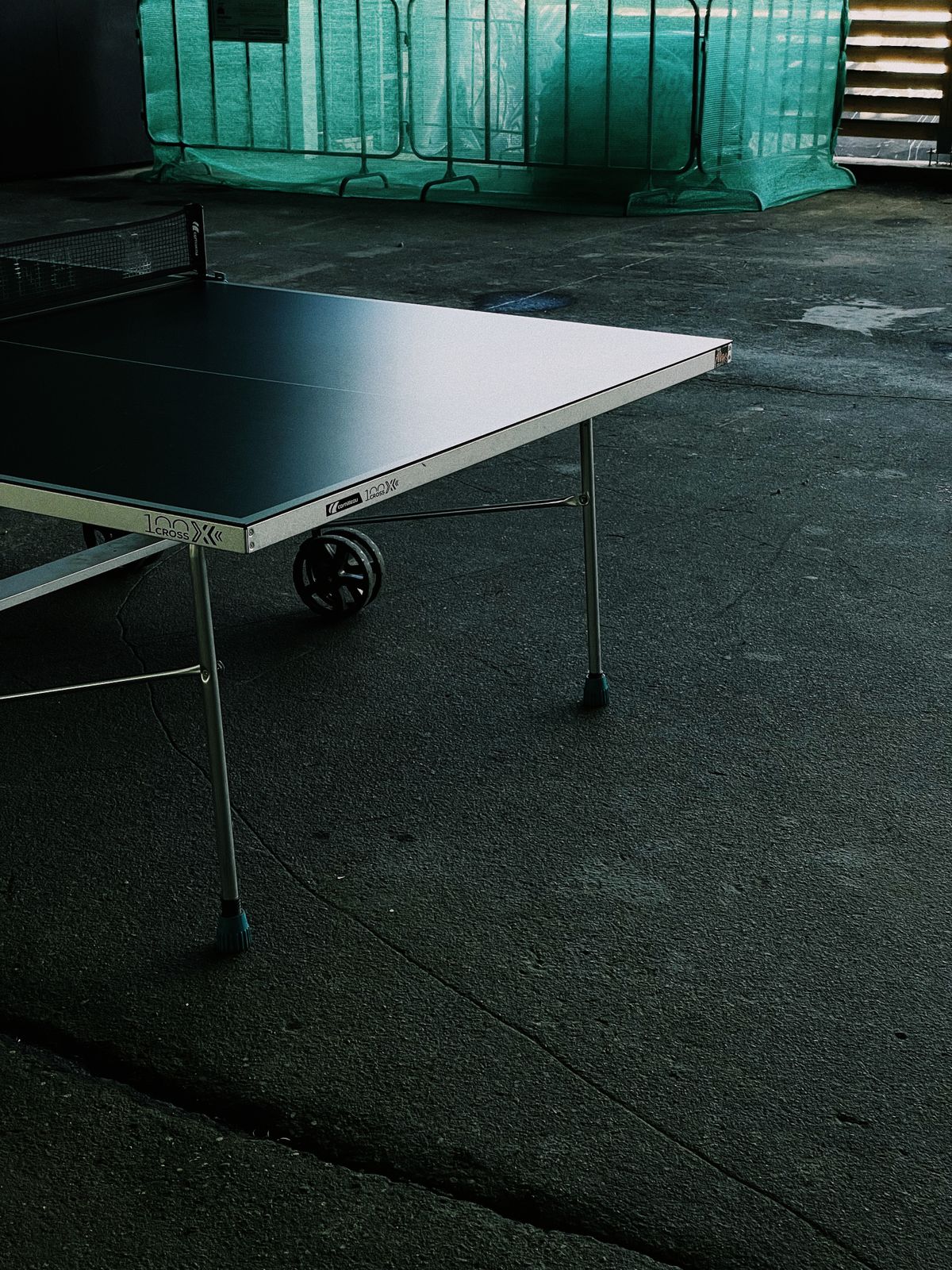
Table tennis earned its slot through a randomized controlled trial embedded in the review. In that trial, 48 children with ADHD were split into three groups: real table tennis training, a simulated table tennis exergame, or a control group with no extra training. For 12 weeks, the two training groups played three one-hour sessions per week. Both training groups improved handwriting and Stroop test performance. But only the children who played actual table tennis improved significantly on the Wisconsin Card Sorting Test, the gold-standard measure of cognitive flexibility, posting gains in total correct responses, fewer perseverative errors, and more categories completed (Chang et al., Perceptual and Motor Skills, 2022).
That detail matters for families choosing between screens and tables. The exergame group, moving to a video-game version of the same sport, did not get the same flexibility benefit. The researchers attributed the difference to the real sport’s demand for head-eye-arm coordination and visual concentration on a physical ball, demands the digital version flattens.
An earlier pilot study pointed the same direction. Fifteen children with ADHD who completed a 12-week table tennis program scored significantly higher than a non-training ADHD group on Stroop Color-Word performance and on Wisconsin Card Sorting total correct responses, alongside gains in locomotor and object-control skills (Pan et al., Journal of Attention Disorders, 2017).
Why One Workout Is Not Enough
The review drew a sharp line between acute and multi-session exercise. Single-session interventions, one bout of exercise before testing, produced heterogeneous and mostly temporary results: isolated reaction-time gains or small dips in non-perseverative errors that faded and often appeared in control groups too.
Programs lasting 4 to 12 weeks told a different story. They delivered significant reductions in perseverative errors, more completed categories on card-sorting tests, and improvements in both the speed and accuracy of cognitive processing. Some studies even linked the cognitive gains to better sleep, with reductions in sleep latency medating part of the improvement. The authors’ mechanistic explanation: repeated sessions build longer-lasting neuroplastic adaptations through BDNF expression, improved cerebral blood flow, and structural change in the prefrontal cortex and basal ganglia, while a single workout only spikes catecholamines briefly.
For a parent, the translation is simple: the cognitive benefit of table tennis is a training effect, not a sugar-rush effect. It accrues over weeks of practice.
What Makes Table Tennis Work for the ADHD Brain
The authors group table tennis with football as open-skill activities: sports where the environment is unpredictable and the player must continuously decide, adapt, and engage motor and executive processes at the same time. Every rally is a rapid cycle of read the spin, choose a response, execute, reset. That is cognitive flexibility training disguised as play, and it is the same reason this site has covered open-skill exercise as protective for the aging brain.
The review’s numbers frame the population: ADHD prevalence runs between 5.29 and 8 percent of children, and the included studies spanned 9 countries with a mean participant age of 9.2 years. The sample skewed heavily male (535 boys, 99 girls), which the authors flag as a limitation for generalizing to girls with ADHD.
Honest Caveats
The review does not crown table tennis the winner. The authors are explicit that substantial methodological heterogeneity and the absence of head-to-head comparisons between sports preclude any conclusion about which modality is best. No meta-analysis was performed for the same reason. Methodological quality averaged 5.2 on the PEDro scale, in the “acceptable” range, and several studies had small samples and no assessor blinding. Medication status, a real confounder in ADHD research, was inconsistently reported across studies.
The honest summary is narrower and still useful: across 17 studies and 634 children, multi-week programs built around sports that force continuous decision-making, table tennis among them, showed the most consistent cognitive flexibility gains of any exercise type studied, and real-table play outperformed its video-game counterpart in the one direct comparison.
The Practical Read
For a child with ADHD, the evidence-backed profile is a structured table tennis program of roughly 12 weeks, at least three sessions per week, with real balls and real opponents. The studies in the review typically used 30 to 90 minute sessions. Improvements in flexibility showed up on card-sorting and Stroop measures, and in one trial they traveled as far as handwriting.
None of this replaces medication or behavioral therapy, and the review’s authors position exercise as a complementary strategy, not a treatment. But for a low-cost, side-effect-free activity that a child can stick with, the argument for the table keeps getting harder to argue with.
Peer-Reviewed Sources
- Rodriguez CAL, Martin-Rodriguez A. Effects of Physical Activity Interventions on Cognitive Flexibility in Children with ADHD: A Systematic Review. Sports. 2026;14(9):389. DOI 10.3390/sports14090389. PMID 42784385. ↗
- Chang SH, Shie JJ, Yu NY. Enhancing Executive Functions and Handwriting with a Concentrative Coordination Exercise in Children with ADHD: A Randomized Clinical Trial. Perceptual and Motor Skills. 2022;129(4):1014-1035. DOI 10.1177/00315125221098324. PMID 35507726. ↗
- Pan CY, Tsai CL, Chu CH, Sung MC, Huang CY. Effects of Physical Exercise Intervention on Motor Skills and Executive Functions in Children With ADHD: A Pilot Study. Journal of Attention Disorders. 2019;23(4):384-397. DOI 10.1177/1087054715569282. PMID 25646023. ↗